
In December, I took a workshop with Kevin Wilson. He gave us some short stories to read and referred to them throughout his lectures, and I felt like I was back in undergrad. Every short story was one I hadn’t read before, which was a major reason I felt like I’d been sent back in time. I was taking my first creative writing workshop again, getting mimeographed pages of stories to read, then discuss with the class.
It inspired me to read and discuss short stories again. I’ve read many short story collections over the years since graduating college, but my writing has stayed more in the word counts of flash and micro fiction, despite my background in short stories.
So, with that undergrad feeling in mind, I decided to take on a project for 2026.
Anyone who knows me knows that I love a project, and I’ve previously done author studies of Beverly Cleary and Roald Dahl on my blog. (I’ve also done more informal author studies of Judy Blume and Robert Cormier, just reading all of their works but not writing about them.) But there’s something satisfying about spending my time reading something, and then talking about it. Or writing about it at least, since I’m not in a college classroom anymore. So I thought that’s what I was going to do with my short story project…
I mapped out the idea: I was going to read one short story every month that I’d previously read in college. Then I’d find another story by that same author that I hadn’t read, and read that one. I wanted to read something familiar and something new, and compare and contrast them, and see how it felt to go back in time to college while also exploring something unknown.
The problem is, the first author I picked was Raymond Carver. I can still remember reading “Cathedral” in my first undergrad writing workshop. I can picture the copied pages, imagine the way the professor pressed the book flat on the machine to catch every word. I remember starting in, not knowing what to expect, and then feeling my world break open as, in some ways, nothing happens, but everything changes. That totally transformed how I thought about stories, especially short fiction.
I could see and feel all of that again as I re-read “Cathedral” earlier this month. I pulled my Carver collection off the shelf and tried to find a story I hadn’t read during that obsessive deep dive eighteen (!!) years ago. Or at least one I didn’t remember too well.
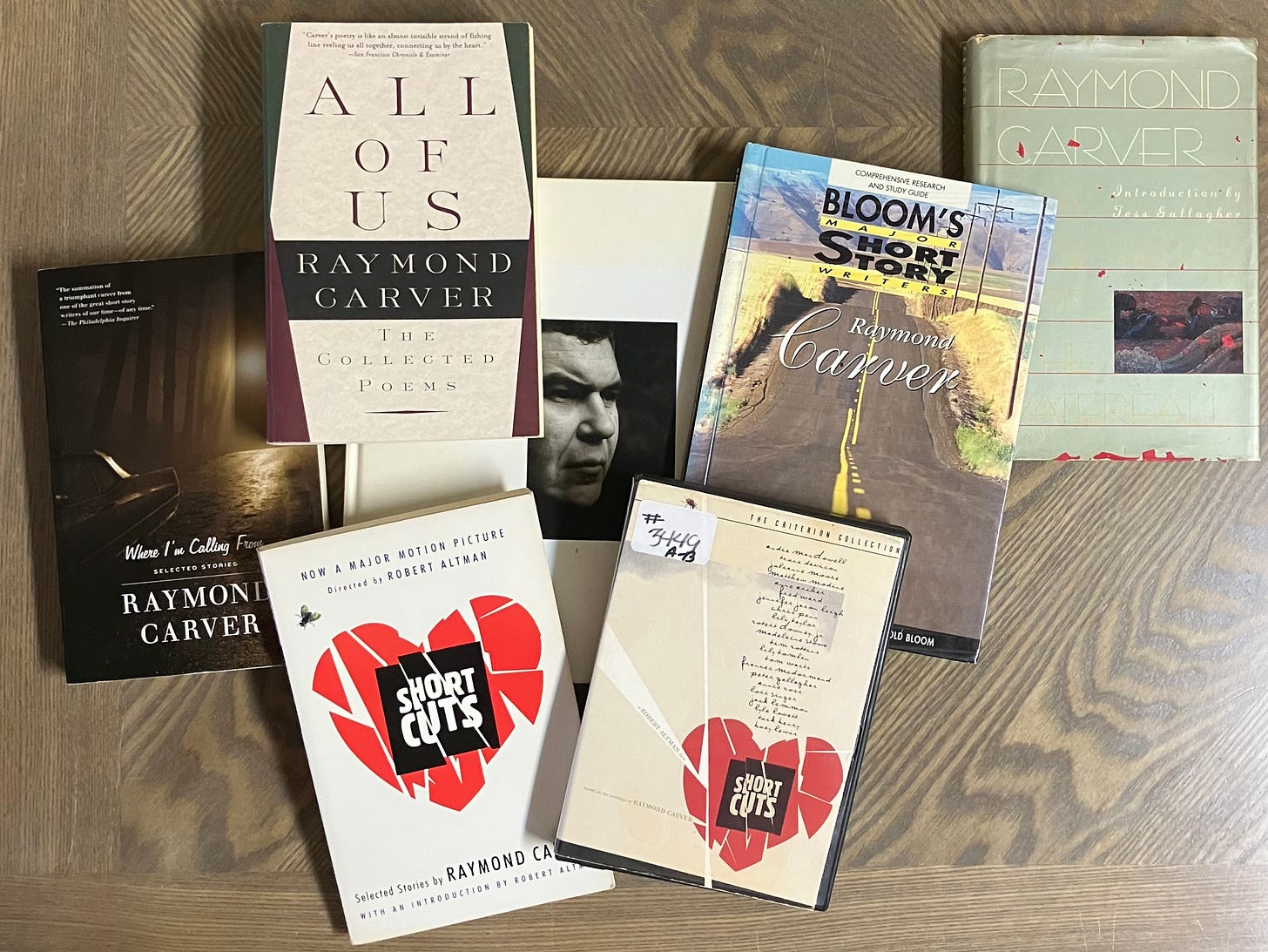
Instead, I started re-reading everything. I borrowed the Short Cuts film from the library, plus some literary criticism and Carver Country: The World of Raymond Carver. And I’m still reading, even as I thought, “Oh, I’ll write about all of these stories for my Substack.”
Then I realized… I don’t want to. I just want to take deep dives back into these authors that grabbed me when I was seriously exploring writing, really writing, for the first time in my life.
Lately, I’ve been living in the past a lot because, let’s be honest, it’s a helluva lot better than whatever’s going on right now. I went back to middle school for March Sadness. I’ve been listening to the first albums I ever bought on cassette and CD (from elementary school!). So revisiting all these college stories feels like the perfect security blanket, and I don’t want to dissect them into blog posts or Substack essays.
But here I am, addressing it in a way, just to share the feeling it’s all giving me, without getting too clinical and distanced from what the words make me feel.
Above, I mention Carver Country: The World of Raymond Carver, which pairs Carver’s writings with photographs by Bob Adelman. You can view it here, but I highly recommend getting it from your library if they have it, and if you’re interested in writer’s spaces and seeing photographs paired beautifully with writing.
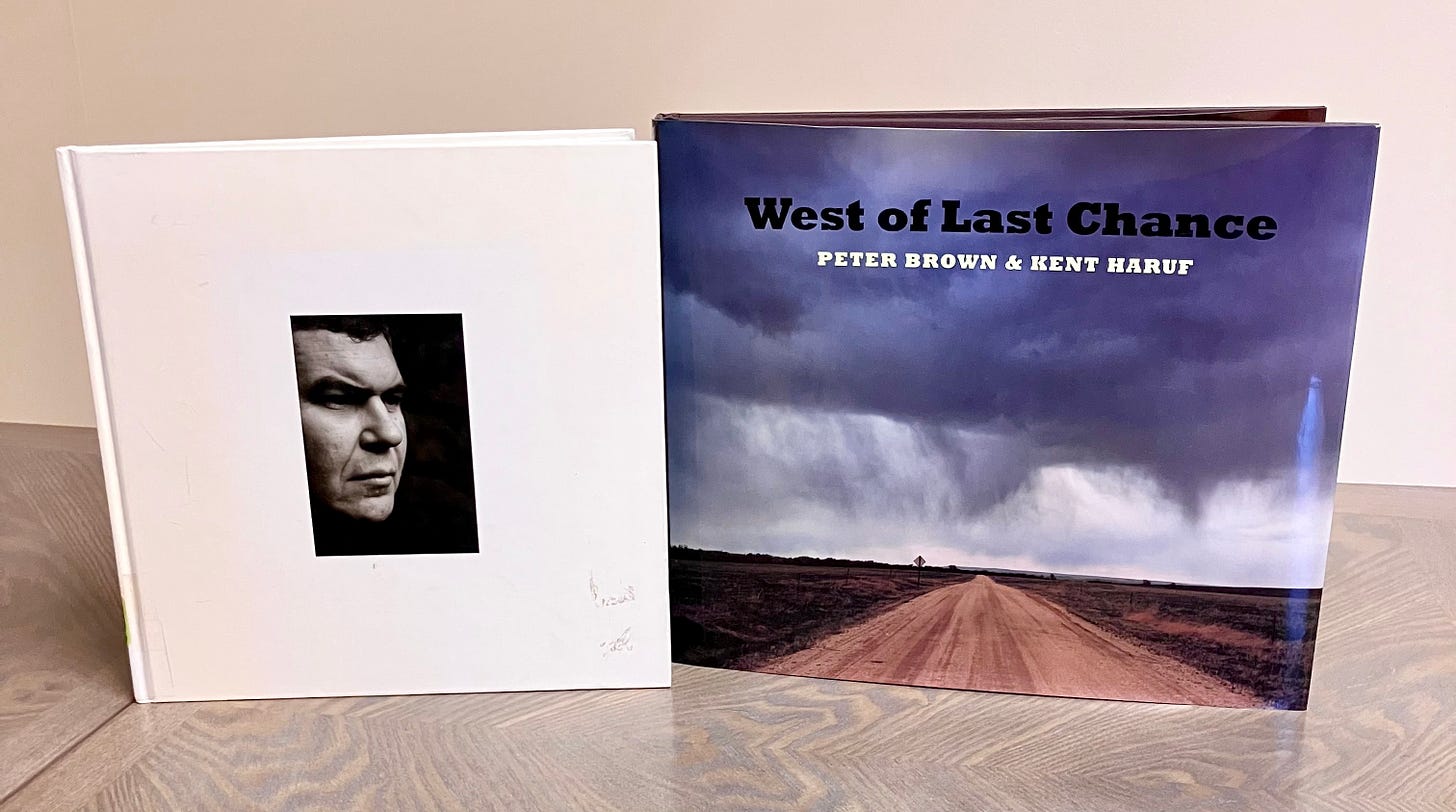
Another recommendation for something similar is West of Last Chance by Kent Haruf, with photography by Peter T. Brown.
Piggybacking off the book recommendations: find a photo that captures your imagination and won’t let go. Write a story about what’s happening in the photo, or what happened right before or right after.
 Lightning Flash Writing
Leave a comment